Anton Paar MCR 92 Manual: A Comprehensive Guide
This guide details the Anton Paar MCR 92 rheometer, offering insights into its operation, maintenance, and advanced techniques for optimal material characterization․
The Anton Paar MCR 92 is a modular compact rheometer designed for comprehensive material characterization, streamlining daily lab routines with its plug-and-play functionality․ This instrument caters to both newcomers and experienced researchers in rheometry, offering a balance of affordability and advanced testing capabilities․
As part of the MCR Evolution series, the MCR 92 excels in viscosity and oscillation measurements, alongside more complex analyses like Dynamic-Mechanical Analysis (DMA)․ Its modular design allows for customization, expanding testing possibilities beyond typical rheometers․
This manual provides a detailed guide to unlock the full potential of your MCR 92, covering setup, operation, data analysis, and troubleshooting․ Accessing the official PDF manual at resources like Transportbehaelter․com ensures optimal use and performance․
Overview of the MCR Evolution Series
The Anton Paar MCR Evolution series represents a significant advancement in rheometry, offering modularity, compactness, and a wide range of testing capabilities․ This series, including models like the MCR 72, 102E, 302E, 502E Power, and 702E Multidrive, is designed to meet diverse research and quality control needs․
A core principle of the Evolution series is its adaptable architecture․ Users can configure systems to suit specific applications, adding or changing measuring systems and accessories as required․ This flexibility ensures long-term investment value․
The series emphasizes user-friendliness, with intuitive software and streamlined workflows․ The MCR 92, a key member, embodies this philosophy, providing powerful rheological analysis in an accessible package․ Detailed information is available in the official reference manual․
Key Features of the MCR 92 Rheometer
The Anton Paar MCR 92 rheometer stands out for its blend of performance and affordability, making it ideal for daily lab routines․ Its modular design allows for a broad spectrum of testing possibilities, exceeding capabilities of comparable instruments․
Key features include a streamlined, user-friendly interface – often described as “Plug and Play” – simplifying operation for both novice and experienced users․ The MCR 92 supports various measurement geometries and environmental control options․
Furthermore, it excels in performing standard rheological tests like viscosity and oscillation measurements, alongside advanced techniques․ Its robust construction ensures reliable data acquisition, and comprehensive documentation, including the official manual, supports optimal utilization․

Setting Up Your MCR 92
Proper setup involves unpacking, connecting to power and a computer, and installing the necessary software for seamless operation and data acquisition․
Unpacking and Initial Inspection
Upon receiving your Anton Paar MCR 92, carefully inspect the shipping container for any signs of damage during transit․ Document any external damage immediately with photographs․ Once opened, verify that all components listed on the packing list are present, including the rheometer itself, power cable, communication cables (typically USB or Ethernet), measuring systems (plates, cones, etc․), and any ordered accessories․
Thoroughly examine the rheometer for any visible defects, such as scratches or dents․ Check the condition of the measuring systems, ensuring they are clean and undamaged․ Confirm that all cables are intact and free from fraying․ Retain the original packaging materials for potential future transport or warranty claims․ If any discrepancies or damage are found, contact Anton Paar support immediately before proceeding with setup․
Connecting the Rheometer to Power and Computer
Before connecting, ensure the MCR 92 is placed on a stable, level surface, free from vibrations․ Connect the provided power cable to the rheometer’s power inlet and a grounded electrical outlet, verifying the voltage matches the instrument’s requirements․ Next, establish communication with your computer using the appropriate cable – typically USB or Ethernet – connecting it to the designated port on the rheometer and your PC․
Avoid connecting or disconnecting cables during operation․ Allow the system to fully power on before launching the control software․ The rheometer should be recognized by your computer automatically; if not, refer to the software installation section for driver installation instructions․ Proper connection ensures reliable data transfer and instrument control․
Software Installation and Configuration
The Anton Paar MCR 92 requires dedicated software for operation and data analysis․ Installation typically involves inserting the provided media or downloading the latest version from the Anton Paar website․ Follow the on-screen prompts, accepting license agreements and selecting the desired installation directory․ Ensure your computer meets the minimum system requirements outlined in the documentation․
Post-installation, configuration is crucial; Launch the software and follow the guided setup, which includes identifying the connected rheometer․ You may need to select the appropriate communication port․ User accounts and permissions can also be configured at this stage․ Regularly check for software updates to benefit from bug fixes and new features․

Understanding the MCR 92 Interface
The MCR 92 interface comprises a control panel and intuitive software, enabling precise control and monitoring of rheological parameters during testing procedures․
Control Panel Overview
The Anton Paar MCR 92’s control panel provides essential, immediate access to frequently used functions․ It features a clear display showing critical measurement data like temperature, torque, and speed․ Key buttons allow for starting, stopping, and pausing measurements directly from the instrument․
Navigation is streamlined with directional arrows and an ‘Enter’ key for confirmation․ Emergency stop functionality is prominently located for immediate safety intervention․ The panel also includes indicators for system status, such as readiness and error messages․
Users can quickly adjust parameters like speed and torque within defined limits․ This direct control complements the software interface, offering a flexible approach to rheological testing․ The panel’s design prioritizes ease of use and efficient operation in a laboratory setting․
Software Navigation and Main Menu
The MCR 92’s software interface is central to controlling the rheometer and analyzing data․ Upon launching, the main menu presents options for creating new measurement routines, loading existing ones, and accessing instrument settings․ A prominent ‘QuickStart’ wizard guides users through basic test setups․
The software utilizes a tabbed structure for organized access to different functions․ These include parameter definition, measurement control, data display, and export options․ A comprehensive help system is integrated, providing detailed explanations and troubleshooting guidance․
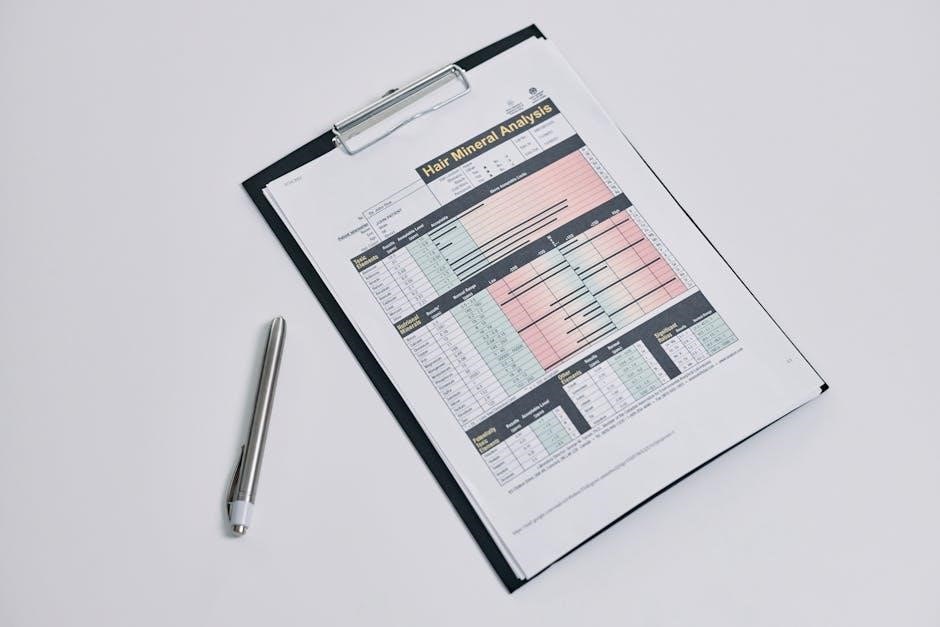
Users can customize the interface to suit their preferences․ Data visualization tools, including graphs and tables, are readily available for real-time monitoring and post-measurement analysis․ The software’s intuitive design promotes efficient workflow and accurate results․
Display and Indicator Functions
The MCR 92 features a clear, informative display panel on both the instrument itself and within the controlling software․ The instrument’s display shows real-time measurement parameters like torque, speed, temperature, and gap distance․ Indicator lights signal the instrument’s operational status – ready, measuring, or error states․
Within the software, dynamic graphs provide visual feedback during measurements․ Users can select various data representations, including linear, logarithmic, and polar plots․ Numerical data is displayed simultaneously, offering precise values for analysis․
Alerts and warnings are prominently displayed to notify users of potential issues․ These include exceeding torque limits, temperature deviations, or communication errors․ The system provides detailed error messages to facilitate troubleshooting․

Performing Measurements with the MCR 92
Precise measurements require careful selection of measuring systems, proper sample preparation, and accurate definition of testing parameters like speed and temperature․
Choosing the Appropriate Measuring System
Selecting the correct measuring system is crucial for accurate rheological data․ The Anton Paar MCR 92 supports a wide variety of geometries, including plate-plate, cone-plate, parallel-plate, and cup-and-bob systems․
Plate-plate systems are ideal for samples with a flat surface and minimal sample volume․ Cone-plate systems provide a uniform shear rate across the sample, suitable for viscosity measurements․ Parallel-plate systems are versatile for varying gap distances and larger sample volumes․
Cup-and-bob systems are best for non-Newtonian fluids and suspensions, minimizing edge effects․ Consider the sample’s viscosity, expected shear rates, and temperature requirements when making your selection․ Refer to the Anton Paar documentation for detailed compatibility charts and recommendations to ensure optimal performance and reliable results․
Sample Preparation Guidelines
Proper sample preparation is paramount for obtaining reliable and reproducible results with the Anton Paar MCR 92․ Ensure samples are homogeneous and representative of the material being tested․ Remove any air bubbles, as they can significantly affect measurements, especially in oscillatory tests․
Temperature control is vital; allow samples to equilibrate to the desired temperature before initiating the measurement․ For powders, ensure consistent packing density․ Liquids should be free of particulate matter․
Carefully clean the measuring system before and after each sample to prevent cross-contamination․ Document all preparation steps, including any dilutions or mixing procedures, for traceability and repeatability․ Following these guidelines minimizes errors and maximizes data accuracy․
Defining Measurement Parameters (Speed, Temperature, Time)
Accurate parameter definition is crucial for meaningful rheological data․ The Anton Paar MCR 92 software allows precise control over shear rate (speed), temperature, and measurement duration․ Select a shear rate range appropriate for the material’s expected behavior – too low may miss key features, too high can cause damage․
Temperature control is vital; set the desired temperature and allow sufficient time for equilibration․ Measurement time should be long enough to achieve stable readings, but avoid unnecessary prolongation․
Consider the test type; viscosity measurements require different parameters than oscillatory tests․ Document all settings for reproducibility and future reference․ Careful parameter selection ensures data quality and accurate interpretation․
Running Standard Rheological Tests (Viscosity, Oscillation)
The MCR 92 excels at standard rheological tests․ For viscosity measurements, select a suitable measuring system and define a shear rate range․ Monitor the stress response to determine viscosity․ Oscillatory tests, crucial for viscoelastic characterization, require setting frequency and strain amplitude․
Perform a frequency sweep to identify the viscoelastic region․ Strain sweeps determine the linear viscoelastic limit․ Ensure proper gap setting and temperature control throughout․
The software guides you through each step, providing real-time data visualization․ Save data securely and document any observations during the test․ These tests provide fundamental material properties․

Advanced Measurement Techniques
Unlock deeper material insights with DMA, creep recovery, and thixotropy tests․ The MCR 92’s modularity supports complex analyses for comprehensive characterization․
Dynamic-Mechanical Analysis (DMA)
Dynamic-Mechanical Analysis (DMA), performed with the Anton Paar MCR 92, investigates the viscoelastic properties of materials as a function of temperature and frequency․ This technique applies an oscillating force to the sample and measures its response, revealing information about its stiffness, damping characteristics, and transitions like the glass transition temperature․
The MCR 92 allows precise control over parameters such as frequency, amplitude, and temperature, enabling detailed analysis of material behavior․ DMA is crucial for characterizing polymers, composites, and other materials, providing insights into their performance under dynamic loading conditions․ Analyzing storage modulus (G’) and loss modulus (G”) provides a comprehensive understanding of the material’s solid and liquid-like behavior, respectively․
Utilizing appropriate measuring systems and careful sample preparation are vital for accurate DMA results․ The software facilitates data interpretation, allowing users to identify key material properties and predict long-term performance․
Creep and Recovery Tests
Creep and Recovery Tests, facilitated by the Anton Paar MCR 92, assess a material’s time-dependent deformation under a constant stress (creep) and its subsequent recovery when the stress is removed (recovery)․ These tests are vital for understanding long-term material behavior, particularly in applications involving sustained loads․
The MCR 92’s precise control allows for accurate application of constant stress and monitoring of resulting strain over time․ Analyzing the creep curve reveals information about viscosity, elasticity, and potential for permanent deformation․ The recovery phase indicates the material’s ability to regain its original shape․
These tests are particularly useful for polymers, viscoelastic fluids, and materials used in sealing or structural applications․ Proper sample preparation and selection of appropriate test parameters are crucial for obtaining reliable results and interpreting material response․
Thixotropy and Rheopexy Measurements
Thixotropy and Rheopexy measurements, achievable with the Anton Paar MCR 92, characterize time-dependent viscosity changes in materials․ Thixotropic fluids exhibit decreased viscosity under shear stress, becoming thinner when agitated, and recover viscosity when left undisturbed․ Conversely, rheopectic fluids increase in viscosity with shear․
The MCR 92 allows for controlled shear rate/stress application and precise viscosity monitoring․ Implementing a shear rate/stress ramp-up and ramp-down sequence reveals thixotropic or rheopectic behavior․ Analyzing hysteresis loops generated during these tests provides quantitative data on the degree of time-dependence․
These measurements are critical for paints, inks, drilling fluids, and other complex fluids where flow behavior impacts application and performance․ Accurate data interpretation requires careful control of temperature and shear history․

Data Analysis and Interpretation
Utilize the MCR 92 software to export rheological data into various formats for detailed analysis, generating graphs and tables to understand material properties․
Exporting Data from the Software
The Anton Paar MCR 92 software provides versatile data export capabilities, crucial for in-depth analysis and reporting․ Users can export measurement results in several common formats, including Microsoft Excel (․xls or ․xlsx), ASCII text files (․txt), and comma-separated values (․csv)․ This allows seamless integration with other data analysis tools and software packages․
To export data, navigate to the relevant measurement window within the software․ Typically, an “Export” or “Save As” option is readily available in the file menu or as a toolbar icon․ The software often allows selection of specific data points or entire datasets for export․ Furthermore, options for customizing the exported data format, such as delimiter selection and header inclusion, are generally provided, ensuring compatibility with various applications․ Proper data export is fundamental for comprehensive rheological interpretation․
Analyzing Rheological Data (Graphs, Tables)
The MCR 92 software facilitates comprehensive rheological data analysis through intuitive graphing and tabular displays․ Data is typically presented as viscosity curves, storage and loss modulus plots (for oscillatory tests), and stress-strain relationships․ Users can customize graph axes, add trendlines, and perform calculations directly within the software interface․
Tabular data displays allow for precise examination of numerical results, including shear rate, shear stress, viscosity, G’, G’’, and phase angle․ The software often includes built-in functions for calculating key rheological parameters, such as yield stress and flow index․ These tools enable detailed characterization of material behavior․ Effective data analysis is vital for understanding viscoelastic properties and material performance․
Understanding Viscoelastic Properties
Viscoelasticity describes a material’s combined elastic (solid-like) and viscous (fluid-like) characteristics․ The Anton Paar MCR 92 excels at characterizing these properties through oscillatory testing․ Storage modulus (G’) represents the elastic component, indicating energy stored and recovered during deformation․ Loss modulus (G’’) reflects the viscous component, representing energy dissipated as heat․
The ratio of G’’/G’ (tan delta) provides insight into the material’s behavior – higher values indicate more liquid-like behavior, while lower values suggest a more solid-like response․ Dynamic-mechanical analysis (DMA) using the MCR 92 reveals how these moduli change with temperature and frequency, crucial for understanding material transitions and performance․

Maintenance and Troubleshooting
Regular cleaning, calibration checks, and addressing common error messages are vital for maintaining the Anton Paar MCR 92’s accuracy and longevity․
Routine Cleaning Procedures
Maintaining a clean MCR 92 is crucial for accurate results and instrument longevity․ After each measurement, thoroughly clean the measuring system – specifically the plates, cones, or cylinders – with a suitable solvent recommended for the sample material․
Ensure all solvent residue is removed before the next use․ The instrument’s exterior should be wiped down regularly with a damp cloth․ Periodically inspect and clean the light path and optics to prevent interference․
Avoid abrasive cleaners, as they can damage surfaces․ Refer to the official Anton Paar documentation for specific cleaning agent recommendations based on the materials used in your experiments․ Proper cleaning prevents cross-contamination and ensures reliable data acquisition․
Calibration and Verification
Regular calibration and verification are essential for maintaining the accuracy of your Anton Paar MCR 92․ Utilize certified reference standards traceable to national standards to verify the instrument’s performance․ This includes checking the angular position, torque, and temperature control․
Anton Paar provides specific calibration procedures and recommended standards in the official documentation․ Perform these checks at defined intervals, or more frequently if the instrument is subjected to significant environmental changes or heavy use․
Document all calibration results meticulously․ Any deviations outside specified tolerances require corrective action, potentially involving adjustments or service by a qualified technician․
Common Error Messages and Solutions
The MCR 92 software displays error messages to indicate issues requiring attention․ “Temperature control error” often signals a problem with the Peltier element or temperature sensor; verify connections and cooling fluid levels․ “Torque exceeded” suggests the sample requires a lower shear rate or a different measuring system․
“Communication error” indicates a connection issue between the rheometer and the computer – check the USB or Ethernet cable․ Consult the manual’s troubleshooting section for a comprehensive list of error codes and their corresponding solutions․
Always document the error message and any steps taken to resolve it․ If the issue persists, contact Anton Paar support for assistance․
Replacing Parts and Consumables
Regular replacement of consumables ensures accurate measurements․ This includes measuring systems (plates, cones, cylinders) which wear over time, and solvent traps requiring periodic changes to maintain optimal performance․ Refer to the manual for recommended replacement intervals based on usage․
Anton Paar provides genuine replacement parts to guarantee compatibility and reliability․ Always use the correct part number when ordering․ Detailed instructions for replacing components, including the light shield and O-rings, are found in the service section of the manual․
Proper disposal of used parts is crucial; follow local regulations for hazardous waste․

Safety Precautions
Always adhere to general lab safety, electrical safety guidelines, and handle samples carefully․ Review the manual for detailed precautions before operating the MCR 92․
General Safety Guidelines
Prior to operating the Anton Paar MCR 92, a thorough understanding of laboratory safety protocols is crucial․ Ensure a clean and organized workspace, free from obstructions․ Always wear appropriate personal protective equipment (PPE), including safety glasses and lab coats, to prevent potential hazards․
Be mindful of moving parts during operation and avoid reaching into the instrument while it’s running․ Never attempt to modify or disassemble the MCR 92 beyond the procedures outlined in this manual․ Report any unusual noises, vibrations, or malfunctions immediately to a qualified technician․
Proper training is essential for safe and effective use․ Familiarize yourself with emergency shutdown procedures and the location of safety equipment․ Always follow the manufacturer’s recommendations for sample handling and disposal․
Electrical Safety
The Anton Paar MCR 92 operates on mains electricity; therefore, strict adherence to electrical safety guidelines is paramount․ Ensure the rheometer is properly grounded through a dedicated earth connection to prevent electrical shock․ Only connect the instrument to a power supply that matches the specified voltage and frequency requirements detailed on the device’s label․
Never operate the MCR 92 with damaged power cords or plugs․ Inspect cables regularly for wear and tear․ Avoid using extension cords whenever possible; if necessary, use a heavy-duty extension cord rated for the instrument’s power consumption․
Do not expose electrical components to moisture or liquids․ In the event of an electrical fault, immediately disconnect the power supply and contact qualified service personnel․
Handling of Samples and Materials
Proper sample handling is crucial for accurate and reliable measurements with the Anton Paar MCR 92․ Always wear appropriate personal protective equipment (PPE), including gloves and eye protection, when handling samples, especially those that are corrosive, toxic, or potentially hazardous․
Ensure samples are thoroughly characterized before measurement, noting any potential reactivity or instability․ Avoid introducing air bubbles during sample loading, as they can significantly affect results․ Clean any spills immediately and dispose of waste materials according to established laboratory protocols․
Be mindful of temperature sensitivity; maintain sample temperature control as needed․ Use appropriate sample containers and measuring systems compatible with the material being tested․