
Article Plan: Thoracic Spine Mobility Exercises PDF
This comprehensive guide details exercises to enhance T-spine movement‚ addressing issues from sedentary lifestyles and postural imbalances‚ offering a PDF resource.
It’s designed for desk workers‚ athletes‚ and anyone seeking improved spinal health through targeted mobility routines and strength training integration.
Welcome to a journey towards a healthier‚ more mobile spine! This guide focuses on thoracic spine mobility exercises‚ crucial for overall well-being. Many unknowingly suffer from restricted movement in the mid-upper back – the thoracic spine – often due to modern lifestyles.
Prolonged sitting‚ common among desk workers‚ significantly impacts T-spine health. Improving rotation and extension isn’t just for athletes; it affects everyday actions like reaching or simply looking around. We’ll explore why mobility differs from flexibility and the importance of consistent practice.
This PDF resource provides practical exercises‚ warm-ups‚ and routines to unlock your spine’s potential‚ enhancing performance and reducing discomfort.
Understanding the Thoracic Spine
The thoracic spine is the central portion of your vertebral column‚ located in your mid-to-upper back. It’s uniquely designed with ribs attached‚ providing crucial protection for vital organs‚ but also limiting its range of motion compared to other spinal sections.
As we age‚ this area naturally becomes less mobile‚ especially without targeted exercise. Understanding this anatomy is key to appreciating why thoracic spine mobility exercises are so important. Neglecting this region can lead to compensations in the neck and lower back‚ causing pain and dysfunction.
This PDF will help you learn to identify and address limitations within your T-spine‚ promoting optimal movement patterns.
Why Thoracic Spine Mobility Matters
Optimal thoracic spine mobility is fundamental for efficient‚ pain-free movement in everyday life and athletic performance. Rotation in the T-spine directly impacts activities like reaching‚ twisting‚ and even simply looking over your shoulder.
Limited mobility forces other areas of the spine to compensate‚ potentially leading to strain and injury. This PDF focuses on restoring and maintaining this crucial movement. Improving T-spine function enhances posture‚ breathing mechanics‚ and overall functional capacity.
Prioritizing this area is an investment in your long-term physical well-being‚ allowing for greater freedom and ease of motion.
The Impact of Sedentary Lifestyles on T-Spine Mobility
Prolonged sitting‚ a hallmark of modern life‚ significantly restricts thoracic spine movement; Slouching‚ common while working at computers or using phones‚ encourages a forward posture and reduces spinal extension and rotation.
This PDF addresses the consequences of these habits‚ as extended periods in these positions lead to muscle imbalances – tight chest muscles and weakened back muscles – further limiting T-spine mobility. Neglecting movement causes the thoracic spine to become less flexible with age.
Reclaiming mobility requires conscious effort and targeted exercises‚ detailed within this guide.
Benefits of Improving Thoracic Spine Mobility
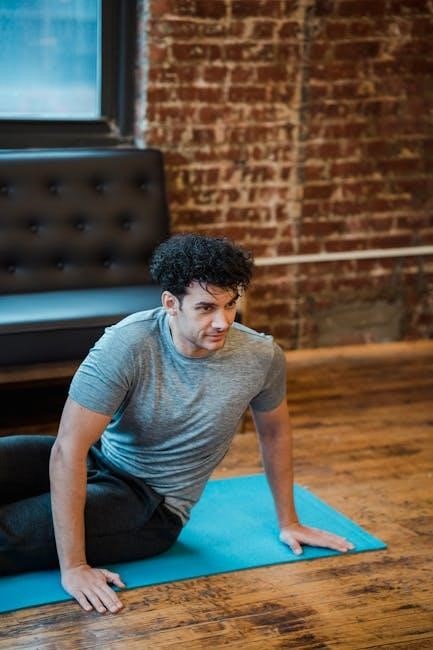
Enhanced thoracic spine mobility‚ detailed in this PDF‚ positively impacts overall movement and well-being. Improved rotation affects everything from athletic performance – swinging a bat‚ for example – to simple daily tasks like reaching or looking over your shoulder.
Increased T-spine movement contributes to better posture‚ reducing strain on other joints. This guide’s exercises promote a full-body approach‚ integrating mobility with strength training and cardio.
Prioritizing mobility‚ especially after age 30‚ is crucial for maintaining a healthy‚ functional spine.
Common Causes of Limited Thoracic Spine Mobility
This PDF addresses factors restricting thoracic spine movement‚ a common issue‚ particularly with aging. Prolonged sedentary behavior – sitting at computers‚ scrolling on phones – contributes significantly to stiffness and reduced mobility.
Postural problems like forward head posture and kyphosis (rounding of the upper back) are key culprits. Muscle imbalances‚ specifically tight chest muscles and weak back muscles‚ further exacerbate the problem.
Age-related changes naturally decrease spinal flexibility‚ but targeted exercises‚ as outlined in this guide‚ can mitigate these effects and restore optimal function.
Postural Issues (Forward Head Posture‚ Kyphosis)
This PDF section details how poor posture severely limits thoracic spine mobility. Forward head posture‚ common with desk work‚ strains the upper back and restricts movement. Kyphosis‚ the excessive rounding of the upper back‚ compresses the thoracic spine‚ diminishing its range of motion.
These postural deviations create muscle imbalances‚ tightening chest muscles and weakening those supporting the spine. Corrective exercises‚ detailed within this guide‚ aim to counteract these effects‚ restoring proper alignment and improving spinal health.
Addressing these issues is crucial for pain relief and enhanced functional movement.
Muscle Imbalances (Tight Chest‚ Weak Back Muscles)
This PDF section explores how muscle imbalances significantly hinder thoracic spine mobility. Prolonged sitting and poor posture often lead to tight chest muscles (pectorals)‚ pulling the shoulders forward and restricting extension. Simultaneously‚ the back muscles (rhomboids‚ trapezius) become weakened‚ unable to counteract this pull.
This imbalance limits rotation and overall spinal movement. The exercises within this guide specifically target stretching tight chest muscles and strengthening the upper back‚ restoring muscular balance.
Correcting these imbalances is vital for improving posture and regaining optimal T-spine function.
Age-Related Changes
This PDF section addresses the natural decline in thoracic spine mobility that occurs with aging. As we age‚ the intervertebral discs can lose hydration and become less pliable‚ reducing the space between vertebrae and limiting movement. Ligaments and tendons also lose elasticity‚ further restricting range of motion.
These changes are often gradual but can significantly impact daily activities and overall quality of life. The exercises detailed in this guide are modified to be safe and effective for individuals of all ages‚ focusing on gentle movements to preserve and improve T-spine function.

Assessing Your Thoracic Spine Mobility

This PDF section guides you through evaluating your current T-spine mobility‚ crucial before starting any exercise program. Self-assessment tests‚ detailed within‚ will help identify limitations in rotation‚ extension‚ and flexion. These simple checks involve movements like reaching behind you to touch your opposite shoulder or observing your posture in a mirror.
Understanding your baseline mobility allows for personalized exercise selection and progression. The guide also outlines when professional evaluation by a physical therapist or healthcare provider is recommended‚ particularly if you experience pain or significant limitations.
Self-Assessment Tests
This PDF provides practical tests to gauge your thoracic spine’s range of motion. Begin with the Thoracic Rotation Test: seated‚ assess how far you can twist your upper body while keeping your hips stable. Next‚ perform the Extension Test – lying face down‚ attempt to lift your chest off the floor‚ noting any restrictions.
The Flexion Test involves seated forward bending‚ observing how much you can round your upper back. Record your findings for each test; limitations indicate areas needing focused mobility work. These assessments are a starting point‚ not a diagnosis.
When to Seek Professional Evaluation
This PDF emphasizes that self-assessment isn’t a substitute for professional medical advice. Consult a healthcare provider if you experience sharp‚ persistent pain‚ numbness‚ or weakness in your arms or legs. Seek evaluation if mobility exercises exacerbate your symptoms or if you suspect an underlying medical condition.
Individuals with a history of spinal injury‚ osteoporosis‚ or other relevant health concerns should obtain clearance before starting any new exercise program. A physical therapist can provide a personalized assessment and tailored exercise plan to address your specific needs and limitations safely.
Key Principles of Thoracic Spine Mobility Exercises
This PDF highlights several core principles for effective T-spine mobility. Prioritize controlled movements over speed‚ focusing on quality of motion. Breathe deeply throughout each exercise to facilitate relaxation and enhance range of motion. Begin with gentle movements and gradually increase intensity as your mobility improves.
Consistency is crucial; regular practice yields better results than infrequent‚ intense sessions. Listen to your body and stop if you experience any sharp pain. Integrate these exercises into a holistic routine including strength training and postural awareness.
Warm-up Exercises for Thoracic Spine Mobility
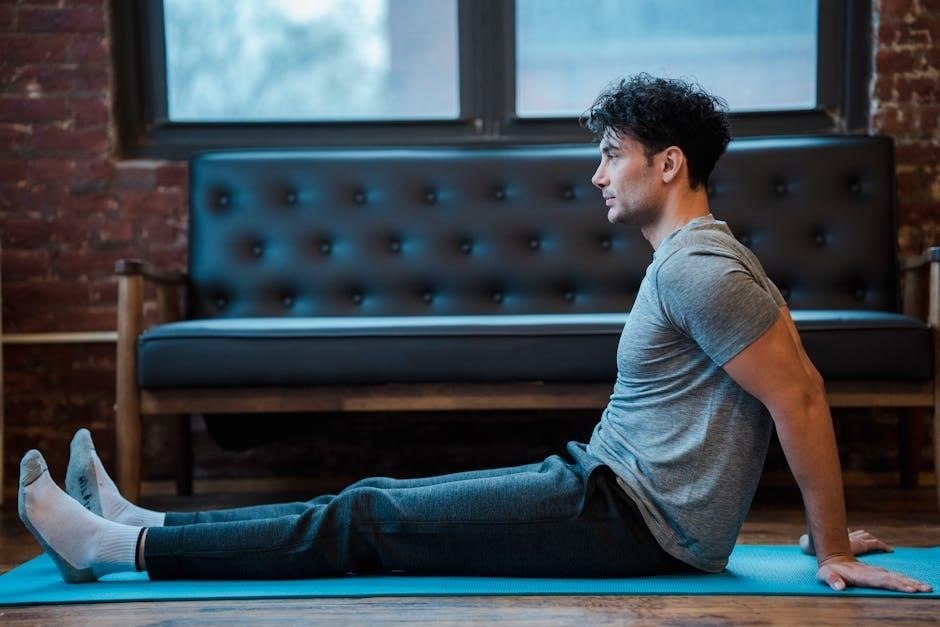
Before diving into specific exercises‚ prepare your T-spine with a dynamic warm-up. Begin with arm circles – forward and backward – to gently mobilize the shoulder girdle. Follow with cat-cow stretches‚ coordinating breath with spinal flexion and extension.
Incorporate thoracic rotations seated or standing‚ keeping movements controlled. Shoulder blade squeezes activate the posterior muscles‚ improving posture. These warm-ups increase blood flow‚ enhance joint lubrication‚ and prepare the muscles for more demanding mobility work‚ maximizing exercise effectiveness.
Thoracic Spine Mobility Exercises ― Rotation
Enhance rotational freedom with targeted exercises. Thoracic Rotation with a Foam Roller involves lying with the roller under your mid-back‚ gently twisting from side to side‚ supporting your head. Seated Thoracic Rotation requires sitting tall and rotating your upper body‚ holding briefly on each side.
These movements improve spinal mobility crucial for everyday activities and athletic performance. Focus on controlled movements‚ breathing deeply‚ and avoiding any pain. Regular rotation exercises counteract the stiffness caused by prolonged sitting and promote a healthier‚ more flexible spine.
Thoracic Rotation with Foam Roller
Utilize a foam roller to gently mobilize the thoracic spine through rotation. Lie on your side with the foam roller positioned horizontally under your mid-back‚ supporting your head with your hand. Gently rotate your upper body towards the ceiling‚ keeping your hips stable.
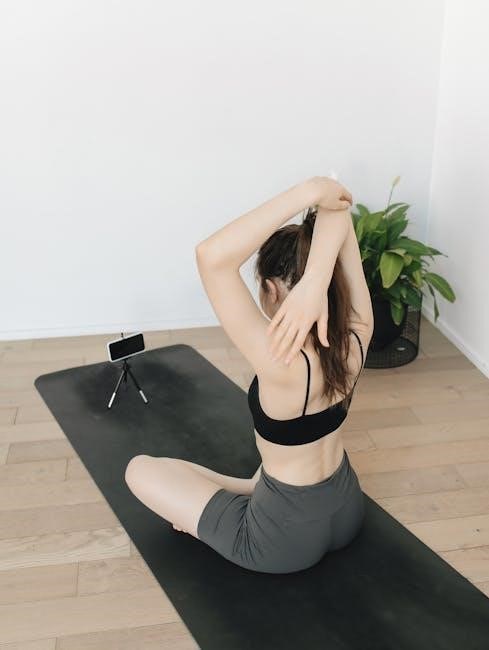
Perform 10-15 repetitions on each side‚ focusing on controlled movements and deep breathing. This exercise targets the muscles surrounding the thoracic spine‚ releasing tension and improving rotational mobility. Avoid forcing the movement and stop if you experience any pain.
Seated Thoracic Rotation
Enhance thoracic spine rotation while seated for accessibility and control. Sit upright in a chair with your feet flat on the floor. Gently twist your upper body to one side‚ maintaining a neutral spine and keeping your hips facing forward.
Hold the rotated position for a few seconds‚ feeling a stretch in your mid-back. Repeat 10-15 times on each side‚ focusing on smooth‚ controlled movements. This exercise improves rotational range of motion and combats the stiffness often caused by prolonged sitting.
Thoracic Spine Mobility Exercises — Extension
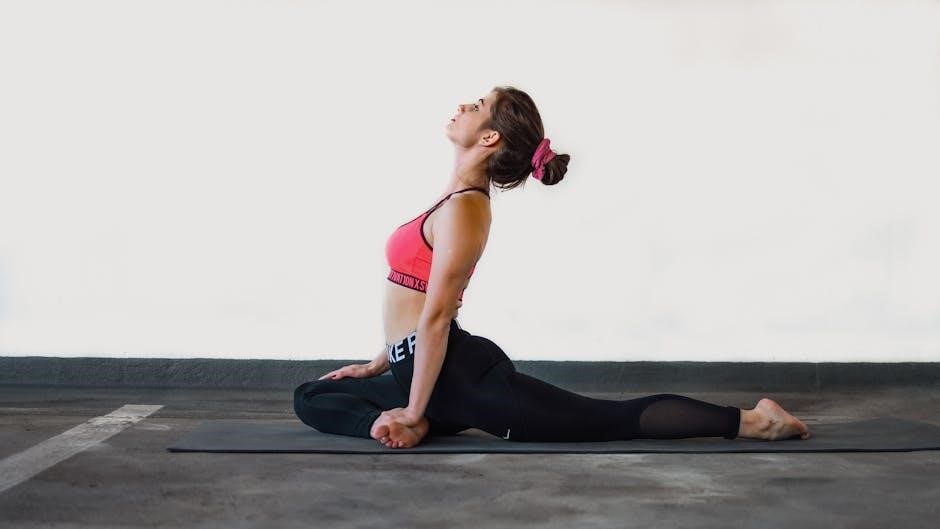
Counteract forward posture with exercises promoting thoracic extension. These movements help restore natural spinal curvature and improve breathing mechanics. Prioritize controlled motions‚ avoiding overextension. Focus on engaging your back muscles to initiate the movement‚ rather than relying on lumbar spine arching.

Extension exercises are crucial for individuals spending extended periods seated‚ as they address the common issue of rounded shoulders and a hunched back. Regular practice can alleviate discomfort and enhance overall spinal health‚ improving daily function.
Cat-Cow Stretch
The Cat-Cow stretch is a gentle‚ flowing movement enhancing thoracic spine flexibility. Begin on your hands and knees‚ aligning wrists under shoulders and knees under hips. Inhale‚ dropping your belly towards the floor (Cow pose)‚ lifting your chest and tailbone. Exhale‚ rounding your spine towards the ceiling (Cat pose)‚ tucking your chin to your chest.
Repeat this sequence slowly and mindfully‚ focusing on isolating the movement to your mid-back. This exercise improves spinal mobility‚ relieves stress‚ and promotes body awareness. Aim for 10-15 repetitions‚ coordinating breath with each movement.
Foam Roller Thoracic Extension
Foam roller thoracic extension effectively improves upper back mobility and posture. Lie with the foam roller horizontally across your upper back‚ knees bent‚ and feet flat on the floor. Support your head with your hands‚ avoiding neck strain. Gently extend backward over the roller‚ opening your chest and allowing your spine to curve.
Slowly roll up and down‚ focusing on each vertebral segment. This releases tension‚ increases flexibility‚ and counteracts the effects of prolonged sitting. Perform 10-15 repetitions‚ breathing deeply throughout the exercise.
Thoracic Spine Mobility Exercises — Flexion
Flexion exercises for the thoracic spine aim to increase forward bending and reduce stiffness. These movements counteract the rounded posture often developed from prolonged sitting and daily activities. Incorporating flexion into your routine can significantly improve overall spinal health and range of motion.
Focus on controlled movements‚ avoiding any sharp pain. These exercises gently stretch the back muscles and promote a more natural spinal curve. Remember to breathe deeply and engage your core for stability during each repetition.
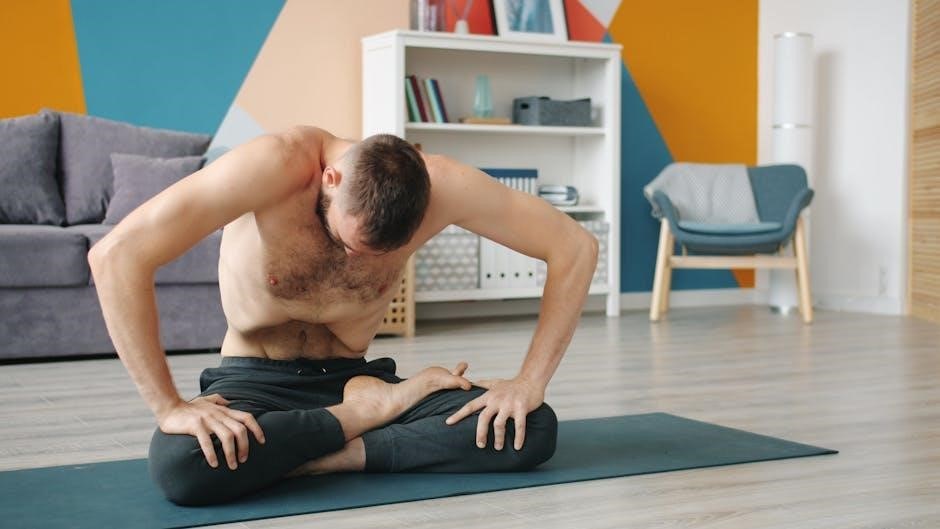
Seated Forward Fold (Modified)
This modified seated forward fold prioritizes thoracic spine flexion while minimizing strain on the hamstrings. Begin seated with legs extended or slightly bent‚ maintaining a neutral spine. Gently hinge forward from the mid-back‚ allowing your chest to approach your thighs‚ keeping your back rounded.
Avoid forcing the movement; focus on feeling a stretch between your shoulder blades. Support your forehead with your hands if needed. Hold for 20-30 seconds‚ breathing deeply. This exercise enhances spinal flexibility and combats the effects of prolonged sitting‚ promoting better posture.
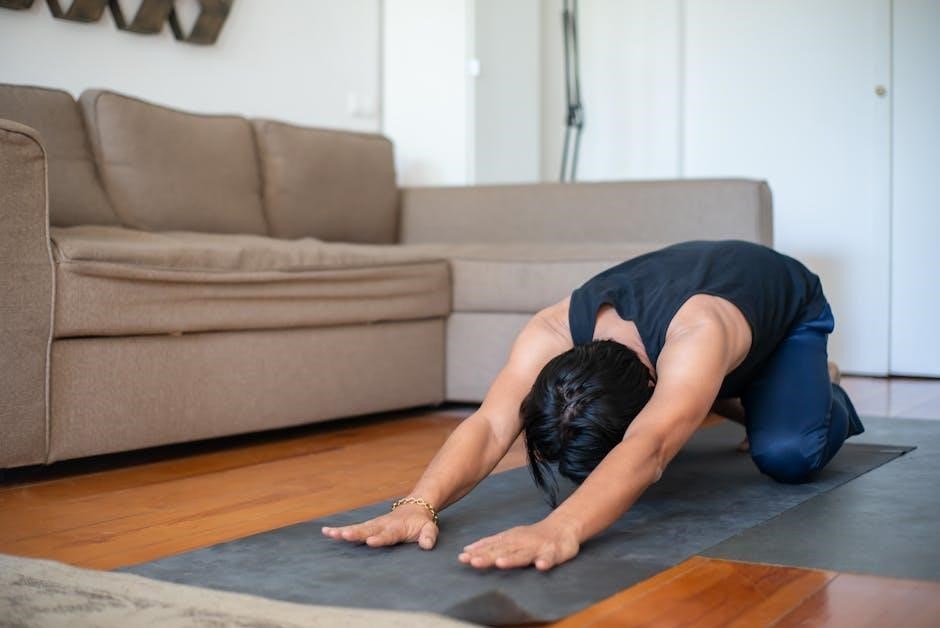
Child’s Pose with Thoracic Reach
This variation of Child’s Pose specifically targets thoracic spine flexion and rotation‚ improving mobility in the mid-back. Start in a traditional Child’s Pose‚ knees wide or together‚ forehead resting on the mat. Extend one arm forward‚ reaching between your knees‚ while the other arm reaches back‚ opening the chest.
Feel a gentle stretch along the spine and between your shoulder blades. Hold for 20-30 seconds‚ then repeat on the opposite side. This exercise counteracts rounded shoulders and promotes a more open‚ relaxed upper back‚ enhancing overall spinal health.
Integrating Mobility Exercises into Your Routine
Seamlessly incorporating thoracic spine mobility work is key for lasting benefits. Aim for short‚ frequent sessions – even 5-10 minutes daily is impactful. Schedule these exercises alongside your existing workouts‚ or dedicate specific days to focused mobility routines.
Consider performing warm-up exercises before activity and cool-down stretches afterward. Prioritize consistency over intensity; regular‚ gentle movements are more effective than sporadic‚ strenuous efforts. Listen to your body and adjust the routine based on your individual needs and comfort levels.
Sample Thoracic Spine Mobility Routine
Here’s a beginner-friendly routine to get you started‚ easily downloadable as part of your PDF guide. Begin with 5 minutes of gentle warm-up‚ like arm circles and shoulder shrugs. Follow with 10 repetitions each of Cat-Cow‚ Seated Thoracic Rotation‚ and Foam Roller Thoracic Extension.
Next‚ perform 8 repetitions of Child’s Pose with a thoracic reach. Conclude with 5 minutes of static stretches‚ holding each for 30 seconds. Remember to breathe deeply throughout each exercise. This routine can be modified based on your fitness level and any existing limitations.
Progression and Modification of Exercises
As your mobility improves‚ gradually increase repetitions or sets within your PDF-based routine. For a greater challenge‚ add resistance bands to seated rotations. Modify exercises based on individual needs; for example‚ use a wall for support during extensions.
If experiencing pain‚ reduce the range of motion or choose a less demanding variation. Prioritize proper form over quantity. Listen to your body and avoid pushing beyond comfortable limits. Consistent‚ mindful progression is key to long-term gains and injury prevention.
Common Mistakes to Avoid
When following your thoracic spine mobility exercises PDF‚ avoid arching excessively during extensions‚ focusing instead on controlled movement. Don’t force rotation; aim for a comfortable range of motion. A frequent error is holding your breath – remember to breathe deeply throughout each exercise.
Neglecting proper posture during exercises diminishes effectiveness. Avoid rushing through repetitions; prioritize quality over speed. Ignoring pain signals can lead to injury. Finally‚ inconsistent practice yields minimal results; prioritize regular sessions for lasting benefits.
Tools to Enhance Thoracic Spine Mobility
Enhance your thoracic spine mobility exercises PDF routine with strategic tools. Foam rollers are excellent for self-myofascial release‚ easing muscle tension and improving extension. Varying densities cater to different sensitivity levels. Lacrosse balls provide targeted pressure for pinpointing knots and restrictions‚ ideal for intercostal spaces.
Consider resistance bands for assisted rotations and extensions‚ adding challenge as you progress. A stable chair or yoga block supports proper form during seated exercises. Utilizing these tools amplifies exercise benefits‚ promoting deeper tissue release and improved movement patterns.
Foam Rollers
Foam rollers are invaluable for thoracic spine mobility exercises‚ offering self-myofascial release. They effectively address muscle tightness‚ particularly in the upper back‚ promoting improved posture and range of motion. Utilizing a foam roller for thoracic extension involves lying supine with the roller positioned horizontally across the mid-back.
Gentle rolling motions target muscle knots and restrictions. Different densities are available; beginners should start with a softer roller. Consistent use enhances flexibility and reduces discomfort‚ complementing your thoracic spine mobility exercises PDF. Proper technique is crucial to avoid discomfort or injury.
Lacrosse Balls
Lacrosse balls provide a focused‚ pinpoint approach to releasing tension in the thoracic spine. Unlike foam rollers‚ their smaller size allows for targeting specific trigger points and tight areas within the back muscles. Position the ball between your spine and shoulder blade‚ then gently roll around‚ applying pressure to tender spots.
This technique enhances localized mobility and can alleviate pain. They are particularly useful for addressing stubborn knots that foam rollers may miss. Integrating lacrosse ball work into your thoracic spine mobility exercises PDF routine can significantly improve overall spinal health and movement patterns.
The Role of Strength Training in Maintaining Mobility
Strength training isn’t just about building muscle; it’s crucial for sustaining the mobility gains achieved through dedicated exercises. A strong core and back musculature provide the necessary support and control for a healthy thoracic spine. Exercises like rows‚ pull-ups‚ and back extensions strengthen these key areas‚ preventing regression and promoting long-term spinal health.
Incorporating these into your thoracic spine mobility exercises PDF routine ensures stability during movement. This synergistic approach – mobility and strength – is vital for optimal function and injury prevention‚ especially for athletes and those with physically demanding jobs.
Mobility vs. Flexibility: Understanding the Difference
While often used interchangeably‚ mobility and flexibility are distinct concepts vital for a comprehensive thoracic spine health plan. Flexibility refers to the passive range of motion at a joint – how far it can stretch. Mobility‚ however‚ encompasses flexibility plus control and strength throughout that range of motion.
A thoracic spine mobility exercises PDF should prioritize both. Simply stretching isn’t enough; you need the strength to actively control movement. This ensures functional movement patterns‚ preventing injury and maximizing the benefits of improved spinal health for daily activities and athletic performance.
Importance of Consistency
Consistent practice is paramount when implementing a thoracic spine mobility exercises PDF routine. Sporadic efforts yield minimal‚ temporary improvements; lasting change requires regular engagement. Aim for incorporating these exercises into your daily or at least several times weekly schedule‚ much like cardio or strength training.
Think of mobility as a skill that degrades without consistent use. Even short‚ focused sessions are more beneficial than infrequent‚ lengthy ones. Prioritizing consistency builds habit‚ reinforces proper movement patterns‚ and ultimately unlocks the long-term benefits of a healthier‚ more mobile T-spine.
Thoracic Spine Mobility for Specific Populations
This PDF’s exercises are adaptable for diverse needs‚ notably benefiting desk workers and athletes. Prolonged sitting often leads to T-spine stiffness; targeted mobility work counteracts this‚ improving posture and reducing discomfort. For athletes‚ enhanced thoracic rotation directly translates to improved performance in various sports‚ impacting power and range of motion.
Modifications are key – desk workers might prioritize quick‚ discreet exercises throughout the day‚ while athletes can integrate more dynamic movements into their warm-ups. Understanding individual demands ensures optimal results and injury prevention.
Desk Workers
This PDF provides targeted relief for those spending hours seated‚ combating the negative effects of prolonged computer use. Simple exercises‚ like seated thoracic rotations and gentle foam roller extensions‚ can be performed discreetly at the workstation.
Prioritize breaking up static postures with frequent micro-movements. Focus on counteracting forward head posture and kyphosis‚ common issues among desk workers. Regular implementation of these exercises improves posture‚ reduces back pain‚ and enhances overall well-being‚ promoting a healthier and more productive workday.
Athletes
This PDF offers athletes a crucial edge by maximizing rotational power and improving performance across various sports. Enhanced thoracic spine mobility directly translates to greater efficiency in movements like swinging‚ throwing‚ and twisting.
Exercises such as thoracic rotations with a foam roller and cat-cow stretches prepare the body for optimal athletic function. Addressing T-spine limitations prevents injuries and unlocks a wider range of motion‚ contributing to improved technique and overall athletic potential. Consistent practice is key for maintaining peak performance.
Resources for Further Learning (PDFs‚ Websites)
To deepen your understanding‚ explore supplemental resources beyond this PDF. Dana Santas‚ the “Mobility Maker‚” offers expertise through her book‚ Practical Mobility‚ and insights available online.
Numerous websites provide detailed exercise demonstrations and articles on thoracic spine health. Search for reputable sources from certified strength and conditioning specialists. Look for downloadable PDF guides focusing on mobility routines and postural correction. Remember to consult healthcare professionals before starting any new exercise program‚ ensuring safe and effective implementation of these techniques.
Prioritizing Your Thoracic Spine Health
Investing in thoracic spine mobility is crucial for overall well-being‚ impacting everything from athletic performance to daily comfort. Consistent implementation of the exercises outlined in this PDF‚ coupled with strength training‚ combats the negative effects of sedentary lifestyles.
Remember‚ mobility isn’t just for athletes; it’s a vital component of health for everyone‚ especially as we age. Prioritize regular movement‚ address postural imbalances‚ and listen to your body. By making T-spine health a priority‚ you’ll unlock improved movement patterns and a higher quality of life.